
What Makes Hotel Guests Click
Email marketing psychology for hotels explains why some campaigns earn attention, clicks, and bookings while others are ignored.
Luxury hotel email performance is not driven by design alone, and it is not driven by discounts alone. It is driven by relevance, timing, perceived value, and decision friction. In other words, it is driven by psychology. Guests do not click because an email exists. They click because something in that email aligns with how they already think, what they already want, or what they believe they may lose by ignoring it.
That is especially true in luxury hospitality, where the booking decision is rarely impulsive and rarely based on price alone. A luxury guest is evaluating experience, trust, status, emotional payoff, and whether the property feels worth their time. Effective email campaigns work when they reduce uncertainty, increase desire, and present the next step clearly. That is why strong email marketing for hotels is not just a communication function. It is a conversion system.
For hotels and resorts, psychology should not be treated as manipulation. It should be treated as message discipline. The goal is not to trick people into clicking. The goal is to understand what motivates action, what creates hesitation, and how to structure email creative so that attention turns into engagement and engagement turns into bookings. That is where a serious hospitality email marketing agency separates itself from a vendor that simply sends campaigns.
How Luxury Guests Evaluate Marketing Emails
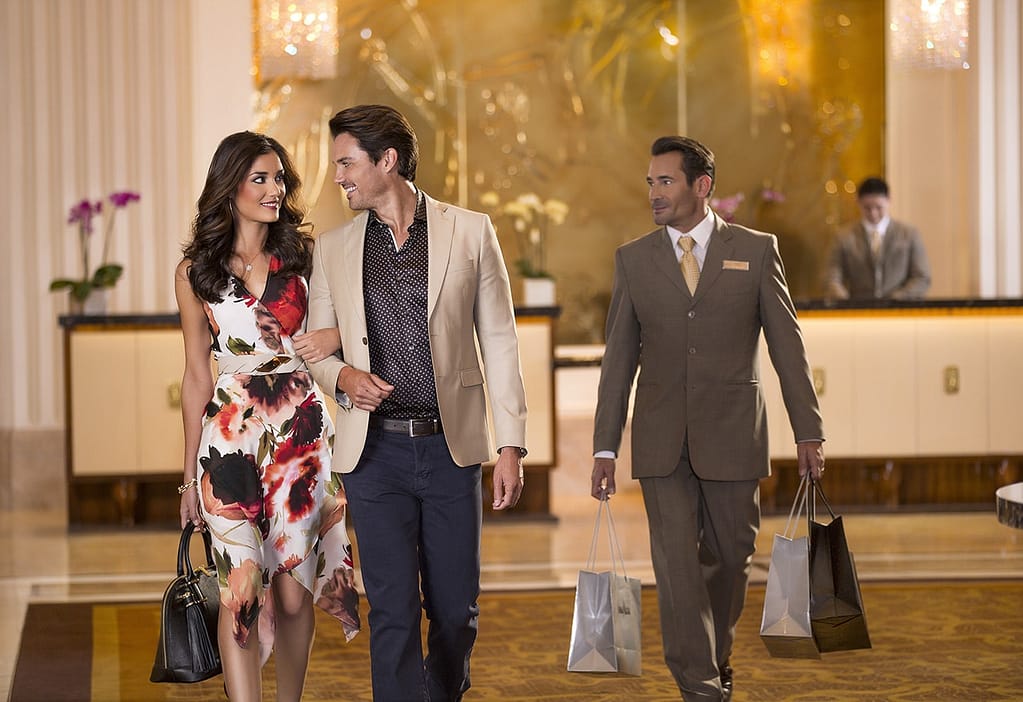
Luxury guests do not read promotional emails the way mass-market consumers read retail offers. They are filtering for signals. Does this feel relevant to me? Does it reflect the kind of experience I want? Is this worth opening, worth clicking, and ultimately worth acting on? The answer depends on more than copy. It depends on whether the email aligns with the guest’s mindset at that moment.
Some travelers respond to privacy, exclusivity, and escape. Others respond to culinary access, family convenience, wellness, golf, romance, or destination-led inspiration. The mistake many hotels make is assuming that broad audience similarity creates message similarity. It does not. Demographics may help define who the guest is, but psychographics help explain why they travel and what kind of offer feels compelling.
This is one reason luxury hotel marketing requires more precision than generic hospitality promotion. A high-value guest does not want to feel targeted by volume. They want to feel understood by relevance. The more an email reflects intent, past behavior, seasonality, or known preference, the more likely it is to earn attention without looking like marketing.
Relevance Beats Frequency
One of the biggest misconceptions in hotel email strategy is that more sends create more revenue. In reality, more sends create more opportunities to be ignored unless the message is relevant. Psychology matters here because attention is selective. Guests instinctively filter out what feels repetitive, generic, or mistimed. A well-timed campaign tied to actual travel intent will usually outperform a higher-volume calendar of weak sends.
That means personalization should go far beyond first names. It should reflect audience construction, prior engagement, booking patterns, geographic relevance, and interest category. A beach-focused family offer should not read like a couples’ wellness package. A repeat winter sun traveler should not receive the same message as a first-time prospect. The closer the message gets to the guest’s likely motivation, the better the performance.
Psychological Triggers That Actually Drive Clicks
The best hotel email campaigns usually work because they combine offer clarity with a small number of reliable behavioral triggers. These triggers are powerful not because they are clever, but because they reduce hesitation and increase perceived value at the point of decision.
Scarcity and Urgency
Scarcity works because availability matters in travel. Suites sell out. holiday periods compress quickly. Signature experiences have real limits. When urgency is genuine, it helps guests prioritize action. When urgency is fake, it destroys trust. Luxury brands especially cannot afford manufactured pressure that feels cheap or transactional.
- Limited-time packages: Useful when tied to a real booking window or season.
- Room-type scarcity: Effective when premium inventory is actually limited.
- Advance-booking deadlines: Strong when the offer clearly expires on a specific date.
The key is honesty. Scarcity should reflect reality, not copywriting theater.
Exclusivity and Belonging
Luxury consumers are highly responsive to controlled access. That does not always mean discounts. It often means priority, recognition, early access, private availability, or benefits not offered to the general public. Exclusivity works because it reinforces identity. It signals that the guest is not just receiving an offer, but being invited into a more privileged experience.
- Email-only access: Early booking windows, private packages, or hidden-value offers.
- Member-style framing: Benefits positioned around access rather than price.
- Priority invitations: New experience launches, seasonal releases, or limited events.
This is one reason resort email should often lead with access, not discounting. In luxury, privilege is usually more persuasive than price reduction.
Curiosity and Discovery
Curiosity is what gets the open and often the click. A subject line or headline that creates an information gap can perform well because the guest wants closure. But curiosity only works when the email delivers on the promise. If the creative implies discovery and the landing experience feels generic, performance falls apart fast.
For hotel brands, curiosity often works best when tied to experience: a new suite category, a hidden destination moment, a private itinerary, a seasonal transformation, or a point of view the guest has not considered before.
Social Proof and Confidence
Travel is a commitment purchase. Guests want reassurance that they are making a smart choice. Social proof helps reduce perceived risk. That proof can come from guest stories, recognizable press validation, repeat-guest behavior, or performance evidence embedded in the message.
In luxury hospitality, social proof should feel editorial, not loud. A well-placed testimonial, a guest experience vignette, or a clear expression of what others value about the property is usually more effective than cluttering the email with generic praise.
Emotional Anticipation
People do not book luxury travel just to occupy a room. They book to become a future version of themselves for a few days. Great email creative understands that and sells the emotional payoff, not just the package details. Anticipation is powerful because it lets the guest mentally experience the stay before the booking is made.
That is where storytelling matters. Not long brand monologues, but concise, vivid framing that helps the reader picture arrival, atmosphere, service, privacy, or the specific feeling of being there.
How to Apply Psychology Without Making Email Feel Manipulative
Psychology is most effective when it improves message fit. It should sharpen the offer, not make the email feel louder. For luxury hotels, that means disciplined execution across the three places where guest decisions are most influenced: subject line, body structure, and call to action.
Subject Lines Should Promise a Specific Value
The subject line should create immediate relevance. It can use curiosity, exclusivity, or urgency, but it still needs to signal what is inside. Strong hotel subject lines usually work because they combine one clear psychological trigger with one clear value proposition. Weak subject lines either say too little or try too hard.
- Urgency: “Ends Sunday: Preferred Rates for Fall Escapes”
- Exclusivity: “Private Access to Our New Oceanfront Package”
- Curiosity: “The Suite Upgrade Our Best Guests Book First”
The point is not to be clever. The point is to make the open feel worth it.
Body Copy Should Reduce Friction
Once the email is opened, the content has one job: move the guest closer to action. That means the copy should be easy to scan, visually balanced, and centered on one primary message. Too many hotels overload emails with multiple offers, multiple audiences, and multiple competing calls to action. That increases cognitive friction and weakens response.
High-performing hotel emails usually do four things well: they establish relevance quickly, present value clearly, support the message with strong visual context, and make the next step obvious. This is where creative execution and targeting discipline matter as much as psychology. Strong performance depends on both.
Calls to Action Should Feel Natural, Not Forced
A call to action works best when it completes the message. If the email is about private access, the CTA should reflect access. If the email is about timing, the CTA should reflect timing. Generic CTA language often underperforms because it disconnects from the emotional logic of the message.
- Access-led CTA: “Unlock the Offer”
- Planning-led CTA: “View Available Dates”
- Experience-led CTA: “Explore the Package”
- Booking-led CTA: “Reserve Your Stay”
The best CTA is usually the one that feels like the expected next step, not the loudest button on the page.
Hotels that want stronger results from this process usually need more than better copy. They need a stronger operating framework that connects targeting, creative, audience quality, and campaign execution. That broader discipline is what a serious hotel marketing agency should be solving, not just email deployment volume.
How to Measure Whether the Psychology Is Working
If psychological framing is improving campaign performance, the effect should show up in measurable behavior. That means looking beyond vanity metrics and evaluating whether the email moved the guest from attention to action.
- Open rate: Useful for judging subject line resonance, though less reliable than it once was on its own.
- Click-through rate: A stronger indicator of whether the message and offer created real interest.
- Click-to-open rate: Helpful for understanding the quality of the content after the open.
- Conversion rate: The most important signal of whether the campaign turned intent into booking action.
- Revenue per send: Often the clearest business measure of campaign effectiveness.
Testing should also be disciplined. Test one variable at a time. Compare one subject line against another. Test one framing angle against another. Test one CTA structure against another. The purpose of testing is not to create endless variation. It is to identify what consistently moves behavior so future campaigns can be built on stronger evidence.
That kind of refinement becomes more powerful when it is connected to stronger audience intelligence and segmentation logic. This is where a more advanced integrated data strategy improves email performance. Better data does not replace psychology. It makes psychological relevance easier to apply at scale.
What Actually Makes Hotel Guests Click
Hotel guests click when an email feels timely, relevant, credible, and valuable enough to deserve attention. They click when the message reduces uncertainty, sharpens desire, and makes the next step easy. That is the real psychology behind effective email campaigns.
For luxury hotels and resorts, the implication is straightforward. Better email performance does not come from louder promotion. It comes from stronger audience understanding, tighter message discipline, and campaigns built around how high-value travelers actually make decisions. When those pieces are aligned, email stops being a routine channel and starts acting like what it should be: a high-leverage conversion system that supports direct bookings and long-term guest value.

